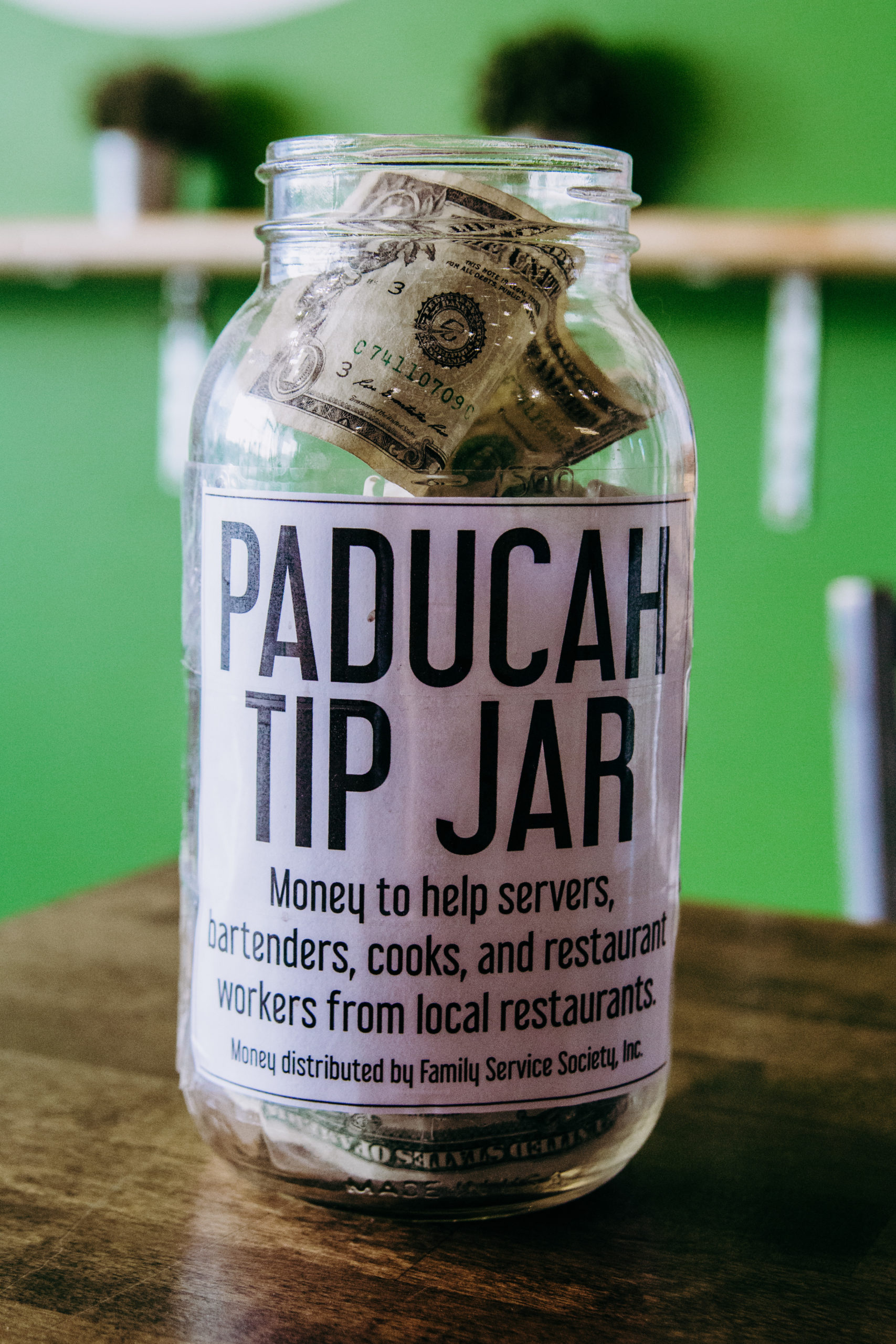

Community continues to rally around restaurant workers, thanks to the Paducah Tip Jar project
When the COVID-19 pandemic shuttered restaurants and other businesses a year ago, people who had never considered seeking assistance suddenly found themselves worrying how they could pay for basic human needs.
Housing and utilities—those monthly expenses that we tend to take for granted, until one day the cash isn’t there.
Business owners and their staff didn’t know how long restaurants would be shut down or if their businesses would even endure the unknown of the early months of the pandemic. Restaurant servers are typically paid an hourly wage before tips, and with closed restaurants or those with reduced hours, the tips that they normally expected vanished.
With the loss of income for so many restaurant and service industry workers in spring 2020, Paducah Mayor George Bray, then a candidate, worked with a friend, Cindy Butterbaugh, and launched the Paducah Tip Jar as a GoFundMe project to help those workers be able to afford their basic human needs. Bray posted on social media and followed up with those who commented or liked his posts. Donations added up quickly—$10 here and there, $100, $2,500, $5,000. Some had notes attached like this one: “We need to be kind to one another, no matter what’s going on.”

Bray initially set the goal at $50,000. Within the first three months, the fund had raised $53,000. To date, the program has raised $57,000, including a recent bake sale through Branch Out Foods that added another $1,300.
“We had the community coming together, pulling together and raising money for a common cause, which was essentially all the restaurant workers who had been displaced,” Bray said.
Restaurant servers make $2.13 an hour without tips, and when the pandemic closed in-person dining, some workers lost their jobs or had their hours cut significantly. Even though restaurants could use carryout services, in-person dining didn’t resume until May 22nd, and only then at 33 percent capacity. In-person dining resumed 50 percent occupancy in December and increased to 60 percent in March.
Bray worked with the Family Service Society to distribute the funds to those who applied. The Paducah Tip Jar fund allowed the Family Service Society to help 171 households with their basic needs. Once the Family Service Society assessed the needs of those requesting the Paducah Tip Jar funds, the agency wrote checks directly to landlords or utility companies.
“And so when you really stop and think about it, $53,000 (the initial collection) on the one hand was a lot of money to be raised,” Bray said. “But then, on the other hand, I think we kept the contributions at $500, so that we could spread the wealth a little bit. When you stop and think about it, that’s really about only 100 people. And while 100 people seems like a lot of people, there were a lot more than 100 people that really needed help. We were able to select a group of restaurant workers who were displaced and who were not drawing unemployment or for various reasons that needed that help. That’s the way that we were able to help them.”

One of those who needed help stood out in Family Service Society director Candace Melloy’s mind. Melloy recalled helping a single woman and her teenage son through the Paducah Tip Jar program. The woman had been working at a local restaurant that was one of the first ones that closed permanently at the beginning of the pandemic. The woman had sought unemployment insurance unsuccessfully for more than two months, and her savings fund had quickly evaporated.
“She just couldn’t do it anymore,” Melloy said. “And when she contacted us, her rent and utilities were all due within the next week. And she had a new job, but she wasn’t going to get a paycheck until the next week.”
The program helped the woman with her rent and utilities.
“Two weeks later, after she got her new paycheck, she gave a portion of it back to us, which of course, we told her not to do,” Melloy said. “But she wanted to, and she insisted, and then she came back and volunteered.”
One month of assistance helped that woman and her son fill in the gap between jobs, thanks to the funds from the Paducah Tip Jar. Melloy said the woman told her that working with the Family Service Society staff was one of the “bright spots” that she had encountered during the pandemic.
“That made us feel good and really helped us to remember why we were doing this on those days when we were all exhausted and didn’t feel like we could come back the next day,” Melloy said. “Stories like hers got up back up and back into the office to do it all again.”
Melloy has story after story of people who sought assistance who had never considered it in the past because they had steady work and a good-paying job.
According to the Kentucky Center for Statistics, employment in Kentucky’s leisure and hospitality industry fell by 36,285 positions in 2020. Most of the losses were concentrated in the food industry, which shed 31,312 positions last year. Those reductions may look like numbers on paper, but for Melloy and Bray, those numbers have names.
“I do think the Paducah Tip Jar helped restaurant workers and showed them that people were noticing, and people care about them,” Bray said.
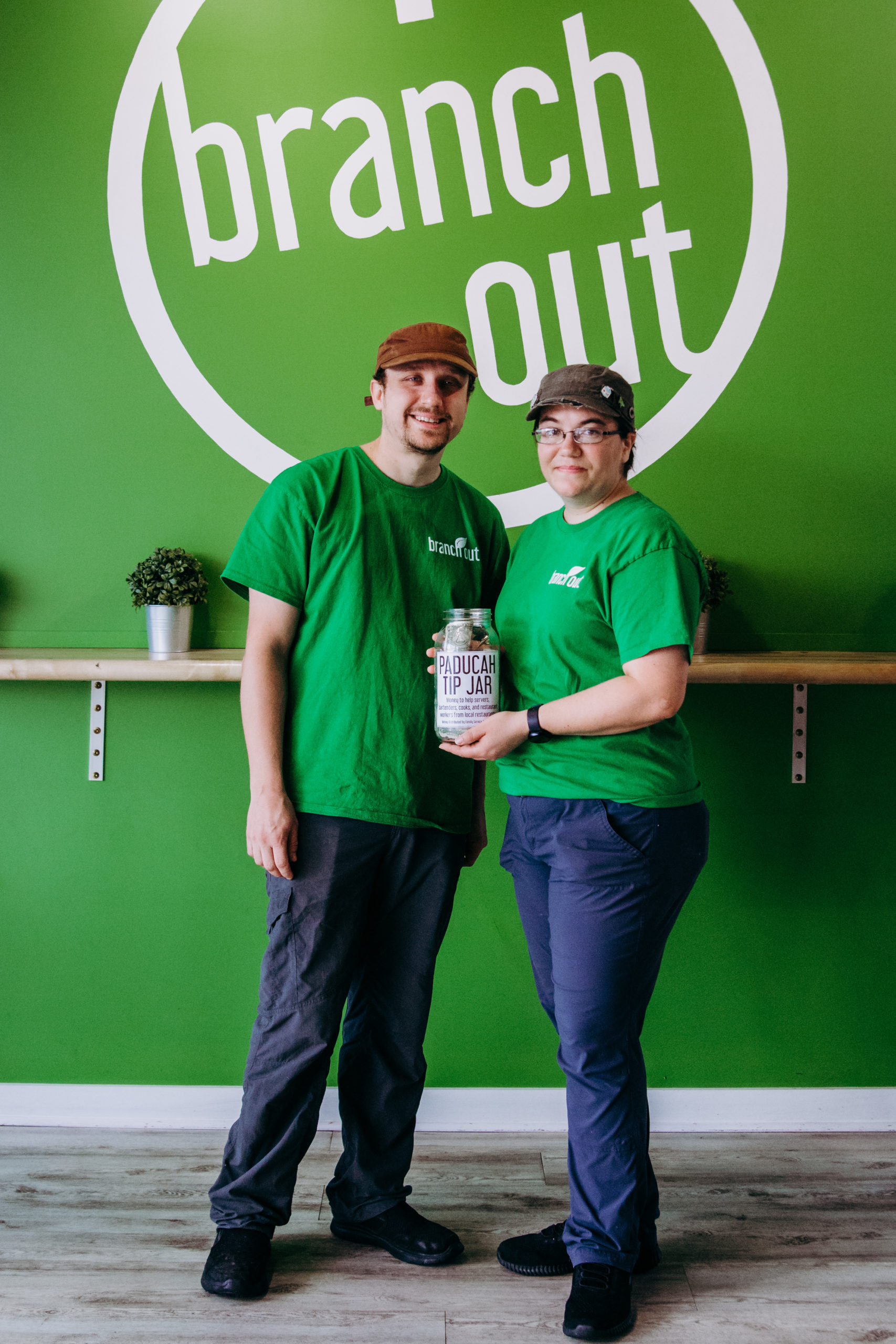
Restaurant owners like Gabrielle Dodd, owner of Branch Out Foods, appreciate the concern of the community. Branch Out experienced a burglary in February in which cash, including the restaurant’s tips, was stolen. Paducah Police recovered most of the stolen funds, but Branch Out decided to pay it forward by organizing a bake sale to benefit the Paducah Tip Jar. The result was $1,300 raised.
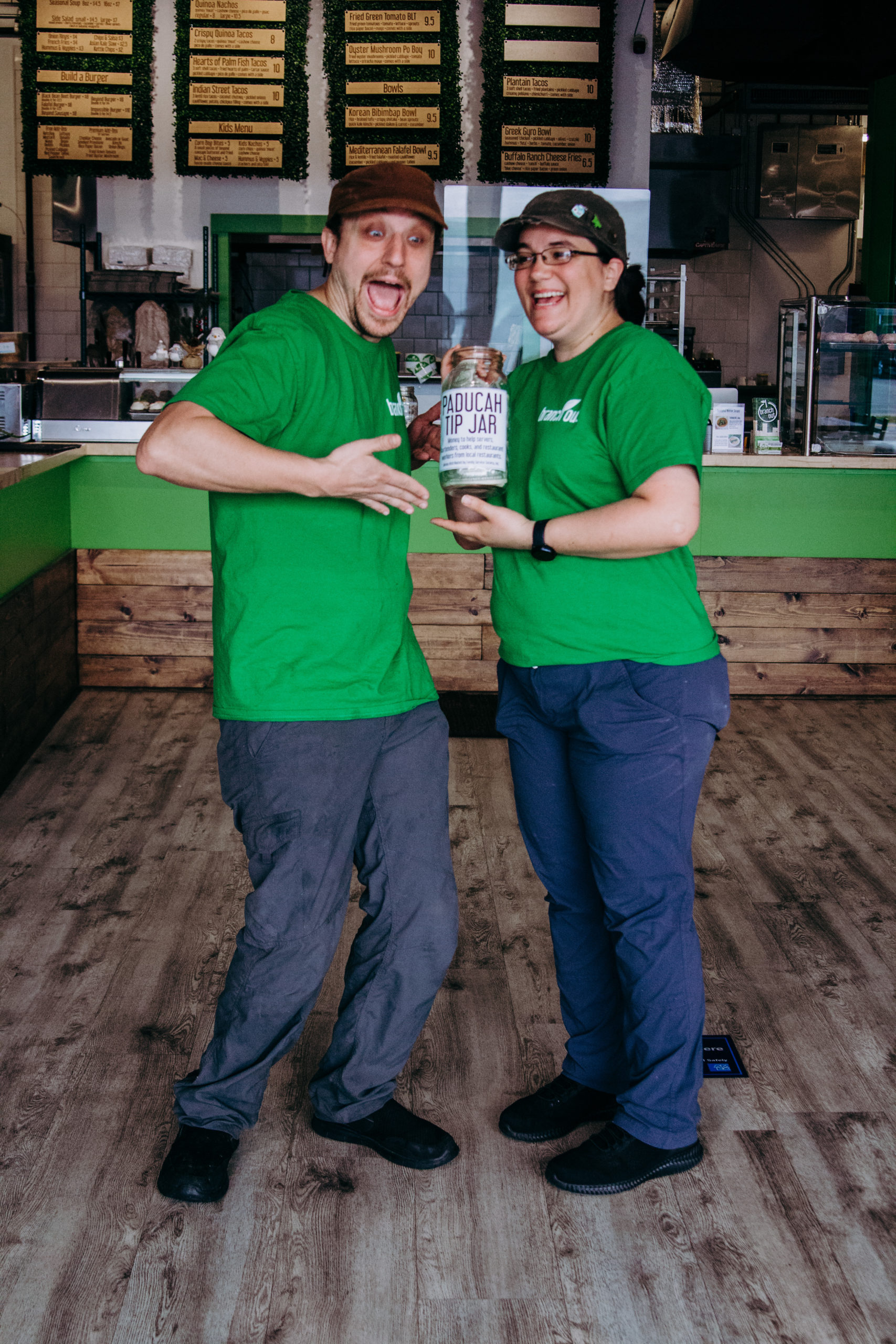
Dodd said while the pandemic has affected many restaurants, her business has remained strong, thanks to steady carry-outs.
“It was nice to be able to help people who are struggling during this year,” Dodd said. “I’m thankful for the community coming together to help our staff.”
Besides the Paducah Tip Jar drive, the generosity manifested itself when people walked into Family Service Society and donated their stimulus checks, both the first and second rounds.
“You know, we live in a pretty generous community,” Melloy said. “I think we would be pretty optimistic. When there’s a need, our community tends to come together and meet that need. And it’s pretty beautiful. I have been in this field for about 15 years, and I’ve seen it on a few different occasions.”
Even a year after the pandemic first shuttered restaurants and the Paducah Tip Jar began, Bray said he has noticed contributions continue on the GoFundMe page.
“Paducah’s Tip Jar is a brand,” Bray said. “We created a brand. We didn’t intend to do that, but that’s what we did. Nobody really owns that brand, and I think it’s something that somebody else could pick up.”