
Donna Holsten looks at a skein of yarn and sees the possibilities. Even the ugliest skein of yarn can be turned into something magical once Holsten begins to work with it.
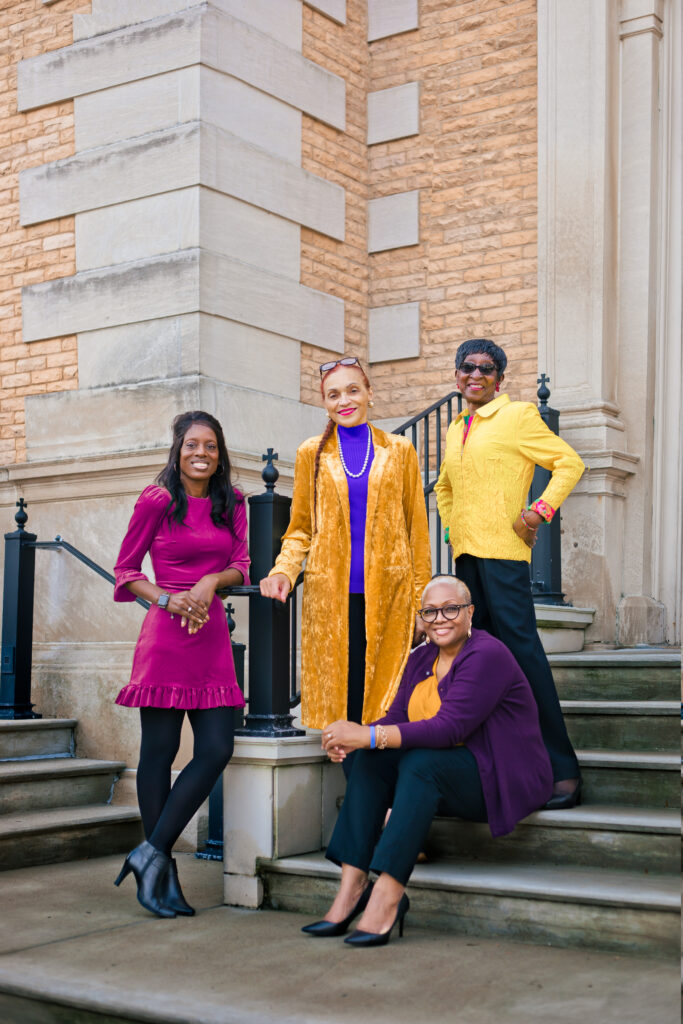
Holsten, a retired teacher from St. Louis who moved to Kentucky Lake, serves as the unofficial coordinator of the Yarn Whisperers, a group of four women who take other people’s unwanted yarn and make scarves or hats for those in need. Unlike other knitting or crochet circles where members gather around a table or in living rooms to chat while stitching, this group is completely ad-hoc. No officers, No structure – just stitching at their own pace and in their own homes.
“It really just started out with an idea that we had leftover yarn, like some quilters have leftover fabric, and you feel guilty buying more fabric if you still have some even though you don’t want to use that,” Holsten said. “Well, that’s kind of how we figured that yarn people would be.”
And she and her friends – Joyce Bredthauer, Linda Dunn, and Jan Kincaid – fit that description. All avid crocheters, they began working with donated yarn that Holsten picked up and began turning into scarves and hats to help keep the less fortunate warm.
Holsten took some of their crocheted items to the Community Kitchen at Murray’s First United Methodist Church and placed them on a table when her church, Immanuel Lutheran, worked at the kitchen about two years ago. The Community Kitchen provides a hot meal for anyone in need, and church groups rotate through hosting it.
Red Bug Yarn and Gifts co-owner Susan Williams met Holsten when her Sunday School class at First United Methodist hosted the Community Kitchen. A knitter and a crocheter, Williams approached Holsten when she saw Holsten arranging handmade scarves and hats on a table to give to those in need. The two women began chatting, and Williams told Holsten that she had several big plastic trash bags of yarn that a customer had donated. Holsten took the yarn, divided it among her friends, and began stitching.
In May, Holsten approached Williams again at the shop and asked if the Yarn Whisperers could put out a box to collect unwanted yarn. Since mid-May, knitters and crocheters who shop at Red Bug have donated three boxes of yarn so far, and Williams said the service project will continue.
“The thing that surprises me is how many people have excess yarn,” Williams said. “But what does not surprise me is the generosity and compassion of knitters, crocheters, and makers.”
Holsten said her group had made 250 to 300 scarves since they began. “It’s just mind-boggling,” she said. “Why should something languish in someone’s closet when someone else could use it.”
The scarves and hats have been donated to groups such as Soup for the Soul, First United Methodist Community Kitchen, HOPE Calloway, Life House, the Murray-Calloway County Need Line, Need Line in Benton, Marcella’s Kitchen in Benton, Jonathan Creek Elementary School’s family resource center and the Christmas Backpack Ministry in Charleston, Missouri.
Holsten said someone once told her that she and her group probably didn’t need to keep making scarves and hats year after year. “I said, ‘You don’t understand. If you’re basically living out of a pillowcase or moving post to post, you don’t take that kind of stuff with you. It has a way of disappearing, and the next winter you need another one,’” she said.
The standard crochet pattern that the Yarn Whisperers use is fairly simple. They chain 165 stitches and then double-crochet for ten rows. Some members will choose to stitch in one color for three or four rows and then switch to another color. The texture and style of yarn also vary from worsted wool to sport yarn to bulky yarn. The women can make scarves out of any type of yarn, from the cheapest ones found at big-box retailers to merino wool found at local yarn shops.
“But you know, it’s not rocket science,” Holsten said. “You just double crochet, which makes a nice scarf.”
Holsten crochets as she watches television, particularly St. Louis Cardinals baseball. She said the pattern is so easy to do that she can halfway watch the game and stitch away.
Like Holsten, Kincaid watches TV and crafts in the evenings. “I hate to say this, but for people who crochet, that’s kind of mindless as you don’t have to count, and like count over so many or do a different stitch. It’s like, OK, let me measure. I need three more inches on this one, and then you do three more inches, and you have a scarf.”
Kincaid lives next door to Holsten near the lake. Kincaid said when she depletes her stash, all she has to do is to walk a few steps to Holsten’s house and shop in the yarn closet. Kincaid has chosen to crochet for children, which means most of her scarves are in bright colors.
“It makes me feel good to know that I’m doing something to help somebody who doesn’t have anything,” Kincaid said.
Bredthauer, another Yarn Whisperer who also is a quilter, said she can take two or three different yarns to blend together to make tweed, or she can alternate rows with colors.
“And she (Holsten) and I decided because it was scrap yarn from people that if we had enough of one color that we would make one color (scarf), but if we didn’t, we would start putting colors together just however they worked,” she said. “I did one with little leftovers, and I think I had 12 to 15 colors in it, and people liked them, so we just kept going. It’s a nice thing to do for people who need help.”
Dunn, another group member, said she made 25-30 scarves last year in between personal projects. “I love that it’s something that can be done with all the leftover yarn that people would discard,” she said. “I understand that once people find out that (Holsten) collects this that they are just so relieved to be able to give away their yarn to someplace that it will be used.”
Every scrap gets turned into something to help people stay warm in the winter.